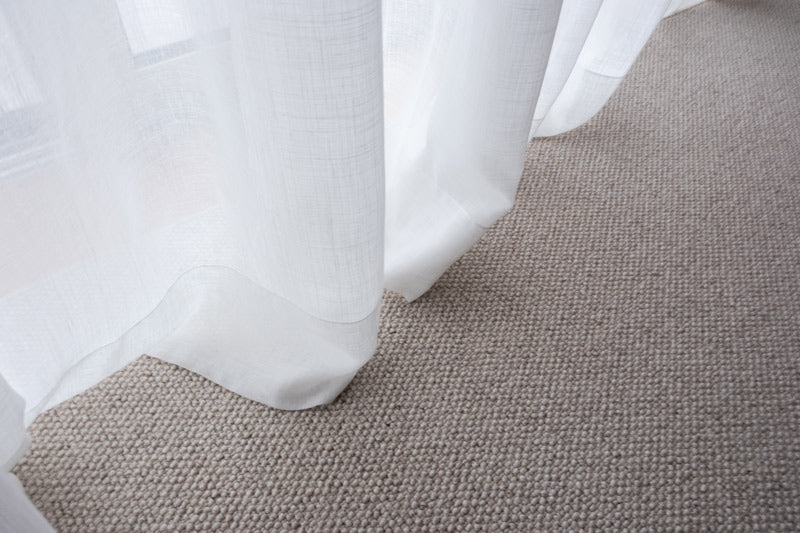
By choosing underfloor heating, you can always enjoy deliciously warm little feet and do you have no large radiators hanging on the wall. Only advantages! But how do you prevent a rug from blocking the heat from your underfloor heating? And which rugs are suitable for underfloor heating?

Heat and insulating capacity

One of the main advantages of a carpet is that it provides warmth and comfort in your interior. Rugs work insulating and hold warm air. Carpets that are unsuitable for underfloor heating retain heat for too long, causing warm air to not distribute well in the room.

It is therefore important to choose a rug that allows the warmth of the underfloor heating to pass through well. A heat-permeable carpet and underfloor heating enhance each other and give you warm feet and comfort during the cold winter months.
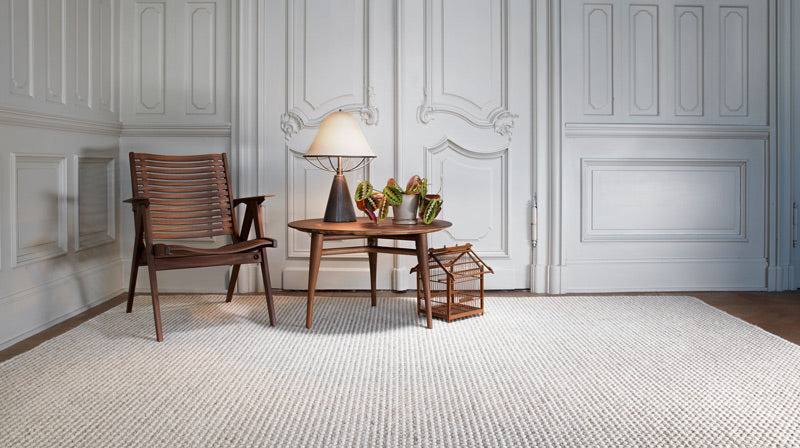
Rugs for underfloor heating

Vloerkleed vloerverwarming Mecca beige

Thermal transmittance

What determines whether a rug is suitable for underfloor heating or not? That is the thermal resistance. This number indicates how much heat the carpet allows through and is expressed in m² k / W.

If this number below the limit of 0.17 m² k / W lies, let it carpet heat passes through wellThe lower this number, the better the rug will allow warmth to pass through in your space. 

Vloerkleed vloerverwarming Stockholm beige

All rugs suitable for underfloor heating

Still looking for a carpet suitable for underfloor heating? All our collections have been tested for their thermal resistance. On the product pages, you can find the thermal conductivity for each rug. 

Kortom: all our rugs are heat permeable and perfect to use in combination with your underfloor heating. So take a quick look in the collections and find the perfect rug for your space.

Rugs for underfloor heating

Vloerkleed vloerverwarming Cuba beige

Frequently asked questions about this topic

How does a rug affect the heat distribution of underfloor heating?

A rug affects how evenly heat distributes throughout a room.
Because it forms an extra layer above the floor, it can partially retain heat or let it pass through in a controlled way. When a rug is too insulating, heat remains trapped beneath the surface and it takes longer for the room to reach temperature.

A rug that conducts heat well, on the other hand, ensures balanced heat distribution and a comfortable feel underfoot without disrupting the performance of underfloor heating.

How do you determine if a rug is suitable for underfloor heating?

The most reliable way is to look at the thermal resistance of the rug, also called the R-value.
This value indicates how much resistance the material offers to heat transfer. The lower the R-value, the better heat can pass through the rug.

When this value is tested and transparently stated, you can confidently judge whether a rug is suitable for use on underfloor heating, regardless of assumptions about thickness or material type.

Is a thick or high-pile rug automatically unsuitable for underfloor heating?

No, thickness or pile height alone are not decisive factors.
Although a high-pile rug traps more air, thermal transmittance is primarily determined by the rug’s overall construction, such as the material used, fiber density and structure.

Some high-pile rugs can be perfectly combined with underfloor heating, provided their thermal resistance remains within the proper limits. That is why it pays to look beyond appearance and also consider the technical properties when choosing.

Why does wool work well with underfloor heating?

Wool naturally has a temperature-regulating property.
The fibre traps heat when it is cold, but at the same time allows enough warmth to pass through for underfloor heating to function efficiently. This creates a comfortable balance between insulation and heat release.

A Wool rug feels warm underfoot without blocking heat circulation. That makes wool particularly suitable for spaces where comfort and energy efficiency come together.

Does the underlay or non-slip layer affect underfloor heating?

Yes, underlays and non-slip materials also play a role in the overall thermal transmittance.
Every additional layer between the floor and the living space adds insulation. When an underlay is not suitable for underfloor heating, it can noticeably reduce efficiency, even if the rug itself transmits heat well.

That's why it's worth considering the entire floor build-up. For rugs that naturally have sufficient weight and stability, a separate non-slip layer is often unnecessary. This keeps thermal transmittance optimal and avoids unnecessary extra insulating layers.

What should you pay attention to when placing a rug on underfloor heating?

Placement and size have a greater impact than is often thought.
A very small rug can trap heat locally, while a larger rug with appropriate thermal permeability provides a more stable and even thermal profile in the room.

By positioning the rug logically—for example under seating or in areas where you spend time—you enhance comfort without creating temperature fluctuations.